
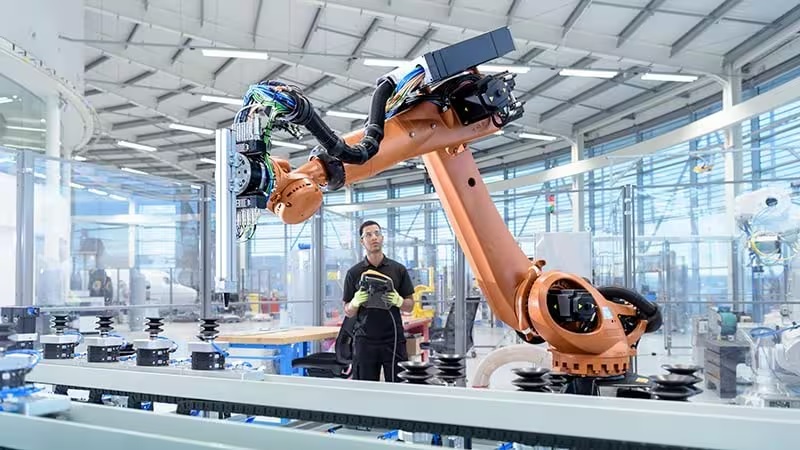
Introduction: The Cornerstone of Economic and Societal Advancement
Industries form the bedrock of every thriving economy, providing employment, stimulating innovation, and shaping societies in ways both tangible and profound. As the lifeblood of commerce and production, industries are not merely economic classifications—they are dynamic systems that respond to consumer demand, adapt to technological revolutions, and define the trajectory of national and global development. From the early days of manual labor and raw resource extraction to the current era of automation and artificial intelligence, the landscape of industry is a reflection of human ingenuity and progress.
The Classification of Industries: Understanding the Pillars of Economic Structure
To comprehend the impact of industries, it is essential to understand how they are categorized. Broadly, industries are segmented into primary, secondary, tertiary, quaternary, and quinary sectors, each playing a specific role in the economic ecosystem.
Primary Industries: Extracting the Essentials
These industries rely on natural resources and are the first step in the production chain.
- Agriculture: Provides food, raw materials for manufacturing, and is vital for rural economies.
- Mining: Supplies essential minerals and fuels for global infrastructure.
- Fishing and Forestry: Sustain biodiversity and support key economic activities in many regions.
Secondary Industries: Shaping Raw Materials into Goods
This sector transforms raw resources into finished or semi-finished products.
- Manufacturing: Covers sectors from automobiles and textiles to electronics and machinery.
- Construction: Builds infrastructure and housing, influencing urbanization and economic planning.
- Industrial Production: Includes refineries, chemical plants, and factories that support broader supply chains.
Tertiary Industries: Service and Distribution Networks
These industries deliver services rather than goods and dominate most modern economies.
- Retail and Wholesale Trade: Connect producers to consumers globally.
- Healthcare, Education, and Hospitality: Contribute to societal well-being and employ large segments of the population.
- Transportation and Communication: Ensure connectivity and logistics for seamless economic functioning.
Quaternary Industries: The Knowledge Economy
This sector revolves around information services and intellectual expertise.
- Research and Development (R&D)
- Information Technology and Software Services
- Financial Consulting and Data Analysis
Quinary Industries: Strategic and Policy-Driven Sectors
The quinary sector involves top-level decision-making and governance.
- Executive Leadership in Corporations
- Government Policy Planning and Public Administration
- Non-Profit Leadership and High-Level Education Professionals
The Industrial Evolution: A Journey Through Time
Industries have evolved in response to transformative historical periods, with each era reshaping economic structures and labor dynamics.
First Industrial Revolution (18th Century)
This period marked the rise of mechanized textile manufacturing, steam engines, and iron production, leading to urbanization and factory systems.
Second Industrial Revolution (19th Century)
Characterized by electricity, mass production, and the emergence of industries like steel, oil, and chemicals. This era expanded industrial capitalism and global trade.
Third Industrial Revolution (20th Century)
With the advent of computers, electronics, and information technology, automation began reshaping traditional jobs and workflows.
Fourth Industrial Revolution (21st Century)
We are now witnessing a fusion of physical, digital, and biological systems—driven by AI, robotics, nanotechnology, and quantum computing. It is redefining not just how industries operate, but what they produce and whom they serve.
The Role of Industries in Global Development
Industries are engines of economic transformation, but their contributions stretch far beyond GDP.
Employment Generation
- Provide direct and indirect jobs across urban and rural areas.
- Support ancillary services, including logistics, maintenance, and training.
- Stimulate informal sector growth, particularly in developing countries.
Technological Innovation
- Drive research funding and scientific discovery.
- Promote efficiency and competitiveness through automation and AI.
- Enable new sectors to emerge, such as clean energy and biotech.
Infrastructure Development
- Stimulate investments in roads, ports, and utilities.
- Promote the rise of industrial clusters and smart cities.
- Catalyze real estate and urban development through industrial demand.
Social and Cultural Transformation
- Redefine lifestyles through consumer products and services.
- Enhance global communication and cultural exchange via media and tech industries.
- Shift demographics through migration and urbanization.
Current Challenges Facing Modern Industries
As global economies evolve, industries must navigate a complex web of challenges.
Environmental Sustainability
- Industrial processes contribute to pollution, deforestation, and carbon emissions.
- Regulations and consumer awareness are pushing industries toward greener practices.
- Green technologies and circular economy models are gaining traction.
Technological Disruption
- Automation threatens repetitive and low-skill jobs, increasing the need for reskilling.
- Cybersecurity and data privacy concerns grow with digital integration.
- Rapid innovation cycles require constant adaptation and reinvestment.
Supply Chain Vulnerabilities
- Global crises such as pandemics and wars reveal dependency on single-source suppliers.
- Companies are investing in local supply chains and diversified logistics.
- Digital supply chain management tools are becoming essential.
Social Responsibility and Ethics
- Consumers increasingly demand transparency in sourcing and labor practices.
- Industries face scrutiny over equity, diversity, and fair wages.
- ESG (Environmental, Social, and Governance) metrics are influencing investment decisions.
The Future of Industry: Toward Smart and Inclusive Growth
The future of industries lies in harmonizing economic growth with societal and environmental stewardship.
Emerging Trends
- Smart Manufacturing: Leveraging IoT, AI, and big data for agile production.
- Decentralized Production: Enabled by 3D printing and local fabrication hubs.
- Digital Services: Expansion of e-commerce, remote work platforms, and virtual experiences.
Policy and Institutional Support
- Governments are investing in infrastructure, innovation hubs, and education.
- Public-private partnerships are vital for bridging industrial gaps in underserved regions.
- International collaborations are setting standards for ethical and sustainable industrial growth.
Conclusion: Industries as Architects of the Future
Industries are more than economic units—they are instruments of progress, resilience, and imagination. Their role in crafting societies, fueling aspirations, and fostering innovation makes them indispensable in shaping a balanced and prosperous world. As the industrial landscape becomes more complex and interwoven with global imperatives, a reimagined approach is necessary. Future-ready industries must embrace sustainability, harness digital power, and uphold human-centric values to remain relevant and impactful in a rapidly changing world. Through thoughtful transformation and ethical leadership, industries will continue to be the architects of a better future.
 Striv Business Blog